How to get published: A debut writer’s roadmap

Updated: Jun 19

For most debut writers, the path to traditional publication runs through a literary agent, without one, the major publishers simply won’t open the door. This means mastering the agency submission process: a targeted cover letter, a tight synopsis, and opening pages of your manuscript strong enough to make an agent ask for more.
Getting your first book published in the UK is genuinely difficult. The market is saturated, the gatekeepers are overwhelmed, and literary power is concentrated at the very top. Add the growing expectation that authors arrive with a ready-made audience - before their book is even out - and it’s easy to see why so many talented writers quietly give up.
But… people do break through. Not by luck, but by understanding how the system works and then gaming it in their favour.
This is how you do it:
Step 1: Landing a literary agent
For most routes into traditional publishing, a literary agent isn’t optional, it’s essential. The major UK publishers simply won’t accept unsolicited manuscripts. An agent is your entry point to the industry: they’ll pitch your book to editors, negotiate your deal, manage rights (film, audio, foreign), and advocate for you throughout.
(Be aware that an agent's commission comes out of what you earn, not your pocket upfront. If any agent asks you to pay them to read your work, walk away).
As you may guess, finding the right agent requires proper research, not a spray-and-pray approach. Tools like QueryTracker, Manuscript Wishlist (MSWL), and the printed Writers’ & Artists’ Yearbook are where you begin. Submit in batches of eight to twelve at a time so you can learn from early responses before exhausting your whole list. Start with your second-choice agents first. Work out any kinks in your submission package before you approach the ones you really want to sign with.
Step 2: Get your submission package right
A submission package typically includes three things: a cover letter, a synopsis, and your opening chapters. Each one does a specific job, and getting any of them wrong is a fast route to rejection.

The cover letter is not a plot summary, it’s a pitch. Keep it to one page and make sure it’s personalised. One genuine sentence explaining why you’ve chosen this specific agent will do more work than a perfectly polished letter that could’ve been sent to anyone.
The synopsis needs to show that your story has a coherent beginning, middle, and end. (Always include the ending. Agents need to see it). Keep the cast tight and the length to a single page.
The opening pages of your manuscript carry the entire weight of your submission. Within a few pages, an agent will decide whether to request your full manuscript or move on. Too much scene-setting, a slow build with no sense of what’s at stake, a protagonist gazing in a mirror on page one - these are the things that consistently sink otherwise good submissions.
The guide below goes into each of these elements in forensic detail, but the short version is: don’t submit before all three documents are fully ready.
Step 3: Get honest feedback first
This is probably the most skipped step, and it costs people dearly. If you’ve had rejections but can’t see what isn’t working, you need outside eyes before you soldier on.

Beta readers and critique partners - people who are well-read in your genre and willing to be honest - can deliver the kind of feedback that agents simply won’t provide. Find them through Scribophile, the Absolute Write forum, or genre-specific communities online. If you want professional assessment, reputable UK services include The Literary Consultancy (TLC), Jericho Writers, and Curtis Brown Creative.
The pattern to watch for is repetition. If three different agents flag the same issue, that’s not coincidence, that’s your signal for a rewrite.
Step 4: Give yourself every possible advantage
A few things debut authors consistently underuse:
Competitions. You don’t have to win - a longlist inclusion is often enough to attract agent attention. The Bath Novel Award, the Bridport Prize, and the Curtis Brown/Women’s Prize Discoveries programme all have strong track records.
Publication credits. Short fiction in respected magazines such as Mslexia, The StingingFly, and The White Review, signals craft, professional seriousness and helps to build credibility.
Platform. Agents increasingly factor in author platform. You don’t need a viral following, just a clear sense of who your readers are and some evidence you’ve started finding them. Our guide covers what this looks like in practice, including the honest reality of Substack, BookTok, and email newsletters.
Final word
The writers who make it tend to submit strategically rather than hopefully. They seek honest feedback before they send anything out. They treat writing as a long-term career rather than a single high-stakes bet, and they see a debut novel as a credential, not a salary. That framing, frustrating as it might be, is the one that usually leads to something good.
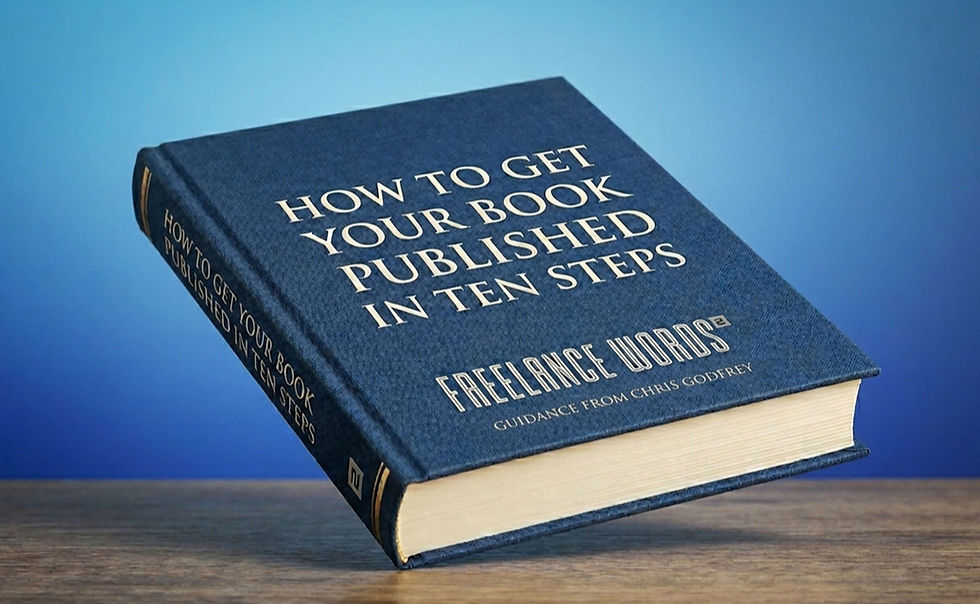
Our guide covers all you need to know to get published - from writing a strong submission and landing an agent, to self-publishing properly, building a readership, and planning a realistic career beyond your first book. Click the image to read or download.
Follow Chris Godfrey for regular insights and opinion on the business of content & marketing. Subscribe to CONTENTED now


Get started with Freelance Words
Strong communication is the bedrock of good business and when there’s a lack of it, problems can arise. Take the ambiguity and doubt out of what your business needs to say. Contact us now.


Comments